
6.7L Power Stroke Diesel Maintenance Lander WY
6.7L Power Stroke Diesel Maintenance in Lander, WY
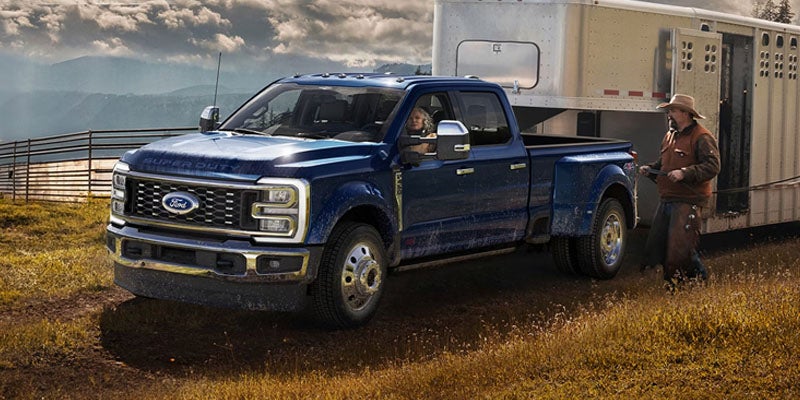
The 6.7L Power Stroke V8 Turbo Diesel represents the workhorse of Fremont County ranches, commercial fleets, and mountain hauling. Operating this heavy-duty powertrain in central Wyoming requires specialized care. Between pulling heavy trailers over South Pass at 7,550 feet and facing winter cold snaps below zero in the Wind River basin, routine maintenance protects your high-pressure fuel system and turbochargers. Our factory-trained diesel technicians on East Main Street service your Super Duty using authentic Motorcraft fluids, genuine dual fuel filter kits, and Ford diagnostic software.
What is the standard maintenance interval for a 6.7L Power Stroke diesel engine in Wyoming? In Wyoming severe duty conditions—defined by heavy towing, sustained idling, gravel road dust, and sub-zero weather—the 6.7L Power Stroke requires engine oil and filter changes every 5,000 to 7,500 miles using 13.0 quarts of approved oil (SAE 5W-40 full synthetic in winter). Dual fuel filters must be replaced every 15,000 miles, the frame-mounted water separator must be drained monthly, and the dual cooling loops should be tested every 15,000 miles to safeguard the Bosch high-pressure fuel pump and variable-geometry turbocharger.
Wyoming Severe Duty vs. Normal Duty Maintenance Schedules
Ford engineering outlines two distinct service paths for the Super Duty: Normal Duty and Severe Duty. While highway cruising at sea level qualifies for standard intervals, nearly all driving in Fremont County falls under Severe Duty.
Towing cattle trailers up Highway 28, operating equipment on unpaved ranch roads around Fort Washakie and Hudson, extended winter warm-up idling, and sudden cold snaps accelerate fluid breakdown and filter contamination. Adhering to the Wyoming Severe Duty schedule prevents premature wear on your fuel injectors, high-pressure fuel pump, and emissions hardware.
6.7L Power Stroke Maintenance Interval Specifications
| Service Item | Normal Highway Interval | Wyoming Severe Duty Interval (Ford Special Operating Conditions) | Technical Specification & Fluid Type |
|---|---|---|---|
| Engine Oil & Filter | 7,500 – 10,000 Miles (per IOLM) | 5,000 – 7,500 Miles (or 6 Months / 300 Engine Hours) | 13.0 Quarts; Motorcraft SAE 10W-30 or SAE 5W-40 Full Synthetic (WSS-M2C171-F1) |
| Dual Fuel Filters (Kit) | 20,000 – 22,500 Miles | 15,000 Miles (or 6 Months / 600 Engine Hours) | Genuine Motorcraft Dual Filter Kit (Frame-Mounted Primary + Engine Secondary) |
| Fuel Water Separator | Monthly Inspection | Monthly Drain (Weekly in Sub-Zero Winter) | Manual drain valve on lower frame filter housing into clear inspection container |
| Diesel Exhaust Fluid (DEF) | Refill as Indicated | Monitor Closely Under Towing (Higher Burn Rate) | 7.5 Gallon Reservoir; API-certified DEF meeting ISO 22241 specifications |
| Primary & Secondary Coolant | Initial 200,000 Miles / 10 Years | Flush at 60,000 Miles / 2,400 Hours (Test Freeze Point & Additive Annually) | Motorcraft Yellow Antifreeze; Test to -34°F or -45°F freeze protection |
| TorqShift 10-Speed Transmission | 150,000 Miles (Fluid Flush) | 30,000 – 60,000 Miles (Frequent Heavy Towing) | Motorcraft MERCON ULV Fluid; Prevents thermal breakdown on mountain grades |
| Front & Rear Differentials | 100,000 Miles | 30,000 – 50,000 Miles | SAE 75W-85 / 75W-140 Synthetic Gear Lubricant with Friction Modifier if equipped |
| Crankcase Ventilation (CCV) | Inspect Every 60,000 Miles | Replace at 60,000 – 75,000 Miles | Prevents excessive crankcase pressure and oil leaks at rear main and pan gaskets |
Intervals verified against official Ford Motor Company Special Operating Conditions. You can also look up vehicle-specific VIN maintenance schedules via the official Ford Vehicle Maintenance Schedule lookup tool.
Critical Systems Requiring Certified Technical Attention
The modern 6.7L Power Stroke utilizes high-precision engineering where minor oversights can lead to significant mechanical failure. When you bring your truck to Fremont Ford Lander, our technicians focus on the systems that matter most in our rugged driving environment.

Dual Fuel Filtration & Water Separation
The common-rail direct fuel injection system on the 6.7L operates at pressures reaching up to 36,000 PSI. The Bosch high-pressure fuel pump depends entirely on clean, lubricated ultra-low sulfur diesel fuel for internal cooling and lubrication.
Water contamination is the leading cause of fuel pump failure. Water passing through the filtration boundary causes metal-on-metal abrasion, sending metallic particles through the entire fuel rail and all eight piezo injectors. Our team replaces both the frame-mounted primary water separator filter and the under-hood secondary micron filter using authentic Motorcraft components, followed by an electronic prime cycle to eliminate air locks before ignition.
Dual-Loop Cooling Architecture
Unlike conventional gas trucks that use a single radiator, the 6.7L Power Stroke features two separate cooling systems with individual water pumps, thermostats, and radiators.
The primary high-temperature loop regulates engine block and cylinder head temperatures. The secondary low-temperature loop cools the air-to-water intercooler, EGR cooler, fuel cooler, and transmission heat exchanger. During autumn service in Lander, our technicians verify both coolant reservoirs for correct pH balance, additive reserve, and freeze protection down to forty degrees below zero, protecting aluminum components from cavitation corrosion.
Sub-Zero Winter Operation for 6.7L Power Stroke Owners in Fremont County
Winter in the Wind River basin presents unique challenges for modern diesel engines. Untreated number two diesel fuel begins forming paraffin wax crystals at approximately fifteen degrees Fahrenheit, quickly plugging fuel filters and starving the engine of fuel.
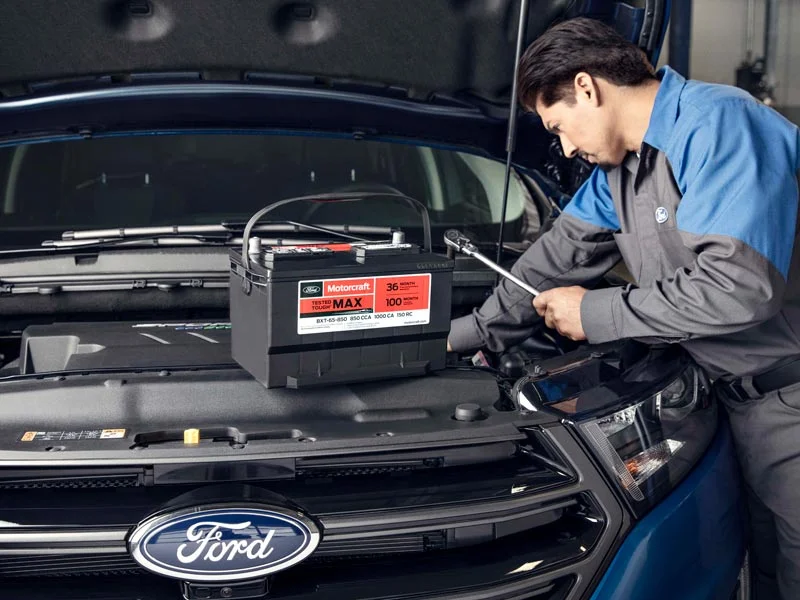
We recommend using Ford-approved Motorcraft anti-gel fuel additives at every fill-up once nighttime temperatures approach freezing. When parking overnight in sub-zero weather, plugging in your factory 1,000-watt engine block heater for two to three hours warms the cylinder blocks and oil passages, significantly lowering starting amperage drag on your dual AGM batteries.
Fremont Ford Mobile Service for Super Duty Fleets
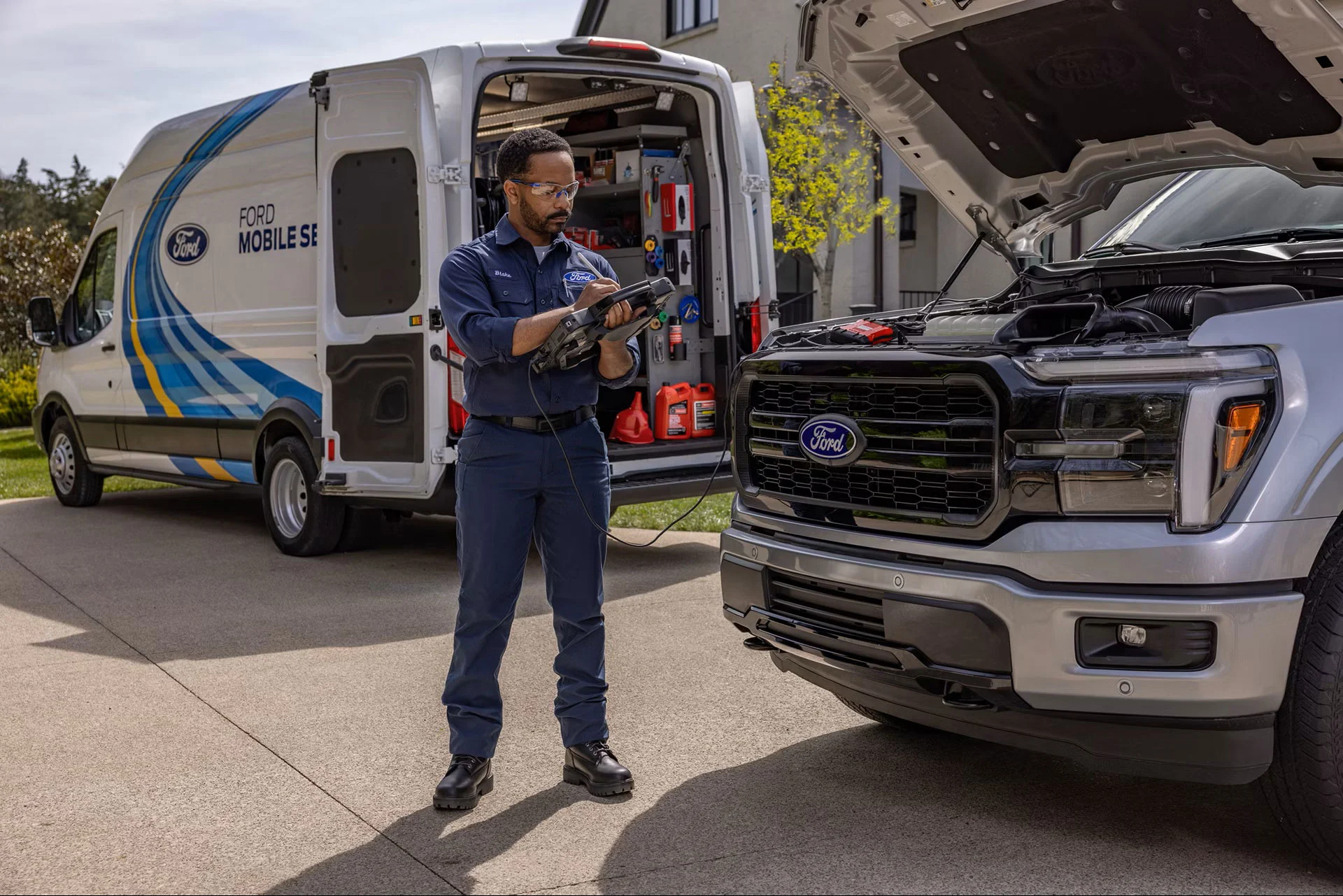
Managing commercial work trucks or ranch vehicles across Fremont County requires operational efficiency. With Fremont Ford Mobile Service, our certified technicians travel directly to your location in our custom-equipped mobile service van.
We perform scheduled oil services, fuel filter replacements, battery diagnostic testing, and software recalibrations right at your shop or job site, minimizing downtime for your crew.
Why Service Your 6.7L Power Stroke at Fremont Ford Lander
Modern diesel technology requires ongoing factory training and OEM specialized tooling. Our service department employs certified Ford diesel technicians who specialize in Super Duty diagnostics, powertrain management, and emissions compliance.
Every service includes a multi-point mechanical inspection, Ford diagnostic code scanning, and documented maintenance history attached to your vehicle service history. Eligible vehicle purchases may include our Fremont Care program, if offered at the time of sale, which provides complimentary oil changes, tire rotations, and round-the-clock roadside assistance across our dealer network. You also can earn and redeem Ford Rewards points on eligible maintenance visits on Main Street.