
Blog / Lander Ford Dealer

High-Altitude Driving: How Lander’s Elevation Affects Your Engine

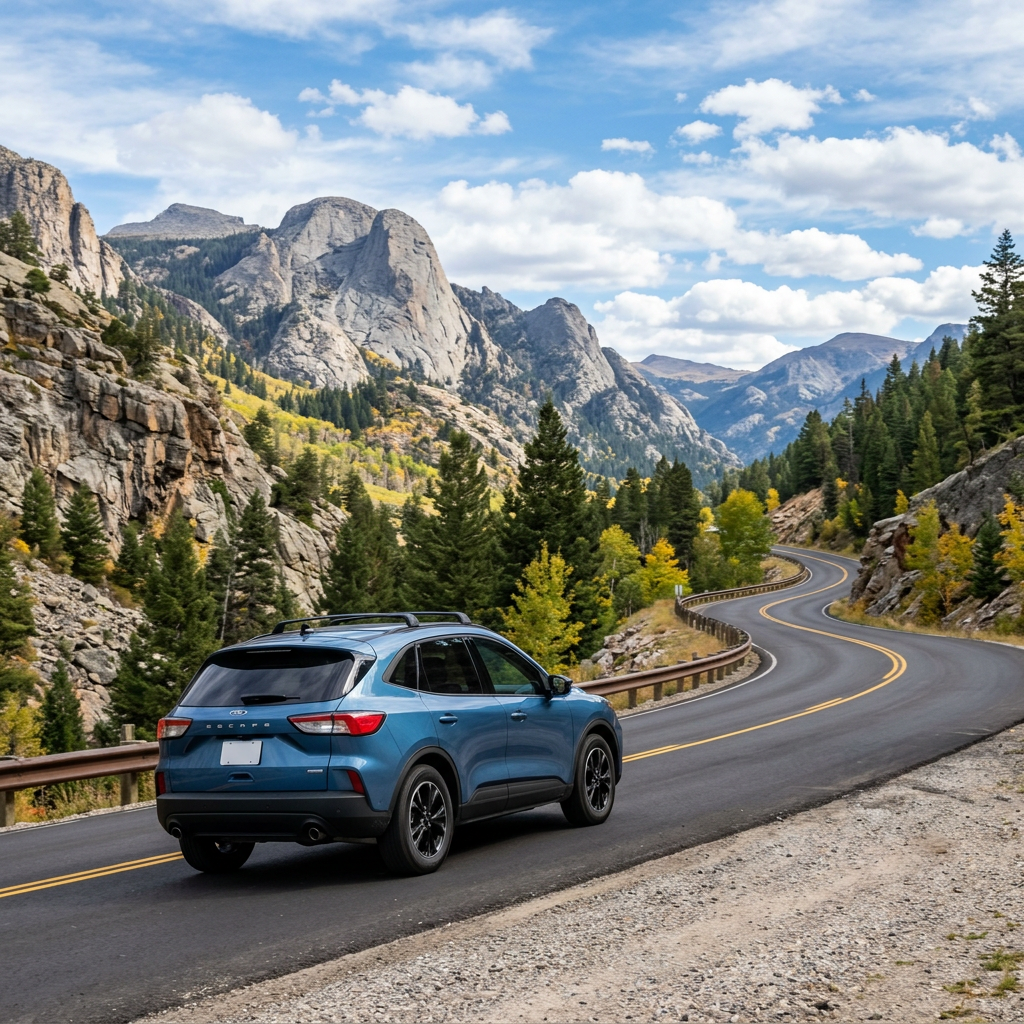
Turbocharged Ford Escape.

At an elevation of 5,358 feet, the atmosphere presents a unique physical challenge to internal combustion engines. The primary factor is air density. As elevation rises, atmospheric pressure decreases, meaning the air becomes thinner and contains fewer oxygen molecules per cubic foot. Every 1,000 feet of elevation reduces air density by approximately 3%. Because an engine requires a precise mixture of oxygen and fuel to create combustion, this reduction in available oxygen directly impacts how much energy your vehicle can produce.

Without a sufficient volume of oxygen, the combustion process is less energetic, resulting in a proportional loss of horsepower. For a conventional vehicle, this physical restriction means the engine must work significantly harder to perform routine tasks, such as climbing steep highway grades or maintaining highway speeds. When the engine works harder to pull in enough oxygen, it experiences increased mechanical stress, which can accelerate the wear on internal components and support systems.

Understanding these elevation dynamics is the first step in protecting your vehicle from premature wear. If you have recently moved to the area or noticed a change in how your vehicle performs during daily drives, our team at Fremont Ford Lander is here to help. You can easily find us or get directions to Fremont Ford Lander to speak with a technician in person. If you prefer to discuss your vehicle's performance over the phone, feel free to give our service department a quick call to ask about high-altitude maintenance.

Table of Contents

How Lander Elevation Affects Naturally Aspirated Versus Turbocharged Vehicles

The mechanical design of your engine determines exactly how it responds to thin mountain air. Naturally aspirated petrol engines draw in air relying solely on atmospheric pressure. Because of this, they lose approximately 3% of their power for every 1,000 feet of elevation gain. At our local elevation of 5,358 feet, a naturally aspirated engine will experience a permanent power loss of roughly 15% to 18% compared to its performance at sea level. For example, a vehicle rated at 300 hp at sea level will effectively produce only about 250 hp when driving around town, requiring more throttle input and higher engine speeds to keep pace.

In contrast, turbocharged engines are far more resilient at high elevations. A turbocharger uses a turbine driven by exhaust gases to mechanically compress incoming air before forcing it into the combustion chamber, which largely compensates for the lower atmospheric pressure. Turbocharged systems use barometric sensors to automatically increase boost pressure in thin air, typically limiting their power loss to just 10% to 15% even at extreme mountain heights. This makes turbocharged configurations highly efficient for heavy-duty work and high-altitude driving, as they maintain their torque curves much better than their naturally aspirated counterparts.

Maintaining these complex induction systems requires specialized knowledge, especially when dealing with high-altitude calibration. Whether you are driving a turbocharged EcoBoost model or a traditional V8, keeping the air filtration and pressure sensors clean is vital for maintaining the correct air-fuel ratio. If you want to experience how different powertrains handle our local terrain, you can schedule a test drive in a certified used car or schedule a test drive in a used vehicle to compare naturally aspirated and turbocharged performance firsthand.

Preventing Engine Overheating and Thermal Stress on Mountain Climbs

Driving up steep mountain grades, such as the roads leading into Dubois, puts an immense thermal load on your vehicle's cooling system. As your engine works harder to overcome the steep terrain and reduced oxygen levels, it generates a substantial amount of internal heat. At the same time, the thinner air at high altitudes is less efficient at carrying heat away from the radiator fins, forcing your cooling system to work much harder than it would at sea level.

Low coolant levels or degraded fluids are the leading causes of high-altitude overheating. Over time, engine coolant loses its chemical properties and its ability to transfer heat efficiently. Additionally, small leaks in hoses, water pump seals, or the radiator tank can cause a gradual loss of pressure, lowering the boiling point of the liquid and leading to rapid boil-overs under heavy loads.

To protect your engine from severe thermal damage during steep climbs, local drivers should follow these preventive maintenance steps:

  • Regularly check the coolant level and inspect hoses for seeping or cracks.
  • Have your radiator fins cleared of dirt, bugs, and road debris that block airflow.
  • Monitor your dashboard temperature gauge closely when climbing mountain passes.
  • Turn off the air conditioning and turn on the heater temporarily if you see the temperature gauge creeping upward.
  • Never remove the radiator cap while the engine is hot, as the pressurized system can cause severe burns.

Monitoring Transmission Health and Fluid Temperatures on Steep Grades

Your transmission is under constant mechanical stress when navigating high-altitude mountain passes. Because the engine produces less power in thin air, the transmission must shift more frequently and remain in lower gears for extended periods to maintain momentum. This continuous shifting and high-torque load generates extreme internal friction, which rapidly raises the temperature of the transmission fluid.

When transmission fluid overheats, it begins to oxidize and lose its lubricating properties. Once the fluid degrades, it can no longer protect the internal clutches, bearings, and planetary gears from metal-on-metal wear. If you notice a slipping sensation, delayed shifts, unusual whining noises, or a sweet, burnt odor after climbing a steep grade, your transmission is likely running too hot and requires immediate attention.

Using your vehicle's mechanical features properly can significantly reduce transmission stress. When descending steep grades, avoid riding your brakes and instead shift your vehicle into a lower gear or use manual mode to utilize engine braking. This simple driving habit reduces the load on both your brakes and your transmission, preventing thermal runaway and extending the lifespan of your drivetrain components.

EV Battery Performance and Range Management in Cold Mountain Climates

Electric vehicles (EVs) handle high altitudes exceptionally well because electric motors do not require oxygen to operate, meaning they suffer zero power loss at high elevations. However, the cold temperatures common to mountain climates present a different set of challenges for battery systems. Cold weather increases the internal resistance of the battery cells, which temporarily reduces the efficiency of the chemical reactions that store and release energy.

In freezing temperatures, an EV can experience a temporary range reduction of 20% to 40%. Approximately two-thirds of this extra energy consumption is used simply to heat the vehicle cabin and keep the battery pack within its optimal operating temperature range. This energy draw also affects the efficiency of regenerative braking systems, as a cold battery cannot accept high rates of charge as quickly as a warm one.

To maximize your EV's driving range during cold mountain winters, consider parking in a garage to keep the initial battery temperature higher. Preheating the cabin while the vehicle is still plugged into a charger is another highly effective strategy, as it uses grid power rather than drawing directly from the battery pack once you hit the road.

Optimizing Oil Change Intervals and Maintenance for High-Altitude Driving

Operating a vehicle in high-altitude environments qualifies as "severe driving conditions" under most manufacturer maintenance schedules. The combination of steep climbs, thin air, and extreme seasonal temperature fluctuations forces engines to run hotter and under higher loads. This accelerated workload breaks down motor oil much faster than flat, sea-level commuting, making regular oil changes essential for engine longevity.

As motor oil degrades, its viscosity changes, and it loses its ability to lubricate critical moving parts, such as pistons and camshafts. This can lead to sludge buildup, increased friction, and poor heat dissipation. Using high-quality synthetic oil that meets precise manufacturer specifications is crucial, as synthetic lubricants offer superior thermal stability and flow better in cold winter temperatures.

Staying on top of your maintenance schedule is the best way to prevent costly engine repairs. Our factory-trained technicians understand the unique demands that Wyoming's terrain puts on your vehicle. When it is time for your next oil change or a comprehensive multi-point inspection, you can easily schedule service online to keep your engine running smoothly.

Frequently Asked Questions About High-Altitude Vehicle Performance

Q: Why does my engine feel so sluggish when driving through high-altitude mountain passes?

A: Your engine feels sluggish because the air is less dense at higher elevations, meaning there is less oxygen available for combustion. A naturally aspirated engine loses about 3% of its horsepower for every 1,000 feet of climb, resulting in an approximate 15% to 18% power loss at our local elevation.

Q: Is a turbocharged engine better than a naturally aspirated engine for high-altitude driving?

A: Yes. Turbocharged engines use a compressor to force more air into the combustion chamber, which helps maintain consistent power levels even in thin air. While a naturally aspirated engine loses significant power, a turbocharger automatically compensates for the lower atmospheric pressure.

Q: How does elevation affect my vehicle's tire pressure?

A: Tire pressure readings increase by approximately 0.1 to 0.2 psi for every 1,000 feet of elevation gain. This happens because the atmospheric pressure outside the tire decreases, allowing the air inside the tire to exert slightly higher gauge pressure.

Q: Should I use a different viscosity of engine oil for high-altitude winter driving?

A: You should always use the oil viscosity recommended in your owner's manual. However, switching to a high-quality full synthetic oil of the recommended weight can provide better flow during cold starts and superior thermal protection during hot mountain climbs.

Q: What should I do if my temperature gauge starts rising while climbing a steep grade?

A: If your temperature gauge begins to rise, turn off your air conditioning immediately and turn on your cabin heater to help pull heat away from the engine. If the temperature continues to climb, pull over safely, let the engine idle to circulate fluids, and never open the radiator cap while the system is hot.

Keep Your Vehicle Mountain-Ready with Fremont Ford Lander

Whether you are commuting daily through Casper or hauling heavy equipment near Dubois, your vehicle's engine and cooling systems work incredibly hard to overcome the challenges of high-altitude driving. From power loss in naturally aspirated engines to the extreme thermal stress of climbing steep mountain grades, regular maintenance is the key to ensuring your vehicle remains dependable.

At Fremont Ford Lander, our factory-trained technicians have the specialized tools, genuine OEM parts, and local expertise needed to keep your vehicle performing at its best. We can inspect your cooling system, test your battery, perform fluid flushes, and ensure your engine is fully prepared for our demanding terrain.

Do not wait for a warning light or a roadside breakdown on a mountain pass to address your vehicle's maintenance needs. If you want to speak with our service team, you can call us directly at (307) 335-3359 to ask questions or book an appointment. When you are ready for your next service visit, stop by our dealership located at 1731 W Main St, Lander, WY 82520, or get directions to Fremont Ford Lander to let our professional team take care of your vehicle.

© 2026 Fremont Ford Lander. All rights reserved.

Posted in:

Related Posts

2026 Ford Bronco Sport Big Bend in Ruby Red on a Wyoming dirt trail near Lander

Trim levels of the 2026 Ford Bronco Sport

The 2026 Ford Bronco Sport delivers four distinct trim levels—Big Bend, Heritage, Outer Banks, and Badlands. Every model comes engineered with standard four-wheel drive, an 8-speed automatic transmission, and a 13.2-inch center touchscreen running SYNC 4 with wireless Apple CarPlay and Android Auto. For 2026, Ford equips an 8-inch digital cluster standard on Big Bend, Heritage, and Outer Banks, introduces a stylish Bronze Package with Sinister Bronze wheels, and expands factory Sasquatch Off-Road Package availability to both Outer Banks and Badlands. Standard 4x4 across the lineup: Every model features standard four-wheel drive. Big Bend, Heritage, and Outer Banks utilize standard 4x4 with 5 G.O.A.T. Modes (Normal, ECO, Sport, Slippery, Off-Road) and HOSS 1.0 suspension. Badlands steps up to Advanced 4x4 with a Twin-Clutch Rear Drive Unit, 7 G.O.A.T. Modes, and HOSS 2.0 suspension. Two EcoBoost engine choices: The 1.5L EcoBoost engine produces 180 horsepower and 200 lb.-ft. of torque on Big Bend, Heritage, and Outer Banks, returning an EPA-estimated 25 mpg city / 30 mpg highway / 27 mpg combined. Badlands features a 2.0L EcoBoost engine producing 238 horsepower and 277 lb.-ft. of torque with paddle shifters and an EPA-estimated 21 mpg city / 27 mpg highway / 23 mpg combined. Towing capability: When properly equipped with the Class II Trailer Tow Package, 1.5L EcoBoost models tow up to 2,200 lbs., while the 2.0L EcoBoost Badlands tows up to 2,700 lbs. Both setups include a factory full-size spare tire. Cold-weather readiness: All 2026 Bronco Sport models with the 1.5L EcoBoost engine ordered for Wyoming include a standard Supplemental PTC Cabin Heater, supplying immediate electric cabin heat on freezing Lander mornings before the engine warms up. Fremont Care protection: Included on eligible vehicle purchases at Fremont Motor Lander Ford, providing 2 oil changes and 2 tire rotations within the initial 12 months of ownership. Drivetrain Standard Standard 4x4 Standard across all four trims with selectable Terrain Management G.O.A.T. Modes Center Screen 13.2 Inches Standard SYNC 4 touchscreen with wireless Apple CarPlay and Android Auto Max Conventional Towing 2,700 Lbs. Badlands 2.0L EcoBoost with Class II Trailer Tow Package when properly equipped Available Off-Road Tech Twin-Clutch 4x4 Standard on Badlands; available on Outer Banks with Sasquatch Package Comparing the 2026 Ford Bronco Sport Trim Levels for Fremont County Drivers Selecting the right 2026 Ford Bronco Sport depends on where your driving takes you around Fremont County. Whether your commute follows US-287 toward Fort Washakie and Dubois, crosses over South Pass to Rock Springs, or heads up Sinks Canyon Road toward the Loop Road switchbacks in the Shoshone National Forest, each 2026 trim level packages specific mechanical hardware, interior appointments, and winter equipment. Shown above: The 2026 Ford Bronco Sport Big Bend features standard 4x4, 17-inch Carbonized Gray-painted high-gloss aluminum wheels, active grille shutters, and LED headlamps. Trim Level 1 2026 Ford Bronco Sport Big Bend: Practical Trail Foundation The 2026 Bronco Sport Big Bend serves as the versatile gateway to the Bronco lineup. Under the hood, the 1.5L EcoBoost engine delivers 180 horsepower and 200 lb.-ft. of torque through an 8-speed automatic transmission, returning an EPA-estimated 25 mpg city / 30 mpg highway / 27 mpg combined. For sub-zero winter temperatures along the Wind River foothills, Wyoming models include the factory Supplemental PTC Cabin Heater to push warm air across the windshield and into the cabin without waiting for engine operating temperature. Key standard and available equipment on the 2026 Big Bend includes: Standard HOSS 1.0 and G.O.A.T. Modes: High-Performance Off-Road Stability Suspension 1.0 with five selectable terrain modes: Normal, ECO, Sport, Slippery, and Off-Road. Upgraded cockpit electronics: Standard 13.2-inch center touchscreen running SYNC 4 alongside a new standard 8-inch digital instrument cluster display, replacing the previous analog dial gauge setup. Trail-ready cabin amenities: Easy-to-clean cloth bucket seats, second-row 60/40 split-fold-flat rear bench, MOLLE strap gear attachment system on front seatbacks, manual liftgate with flip-up rear glass, and a built-in bottle opener recessed inside the hatch pillar. Ford Co-Pilot360 Assist+: Standard driver-assist suite featuring Adaptive Cruise Control with Stop-and-Go and Lane Centering, Pre-Collision 1.5 Assist with Automatic Emergency Braking, BLIS with Cross-Traffic Alert, and Rear Cross Traffic Braking. Available Black Diamond Off-Road Package: Adds 225/65R17 all-terrain tires, steel under-engine skid plate, steel canister shield, front brush guard with two cast recovery hooks, 400W Pro Power Onboard with dual AC outlets, pre-wired auxiliary switches, and the Class II Trailer Tow Package with a full-size spare tire. Available Bronze Package: New for 2026, this styling package adds 17-inch Sinister Bronze-painted aluminum wheels, bronze exterior badges, bronze fender vents, an Ebony Black grille with bronze BRONCO lettering, a Painted Shadow Black roof, and sport contour bucket seats with Canyon bronze stitching. It can also be paired with Black Diamond trail armor. Trim Level 2 2026 Ford Bronco Sport Heritage: 1966 Retro Styling with Modern 4x4 Tech Inspired by the original 1966 Ford Bronco, the 2026 Bronco Sport Heritage infuses nostalgic styling accents into the capable Big Bend architecture. Mechanically identical to the Big Bend with its 1.5L EcoBoost engine, 8-speed automatic, standard 4x4, and HOSS 1.0 suspension, Heritage stands out through exclusive two-tone exterior finishes and vintage cabin textures. Key distinctive highlights of the 2026 Bronco Sport Heritage include: Vintage exterior signature: Factory Oxford White painted roof, Oxford White grille with red BRONCO lettering, Oxford White bodyside script decals, and retro 17-inch Oxford White-painted aluminum wheels. Standard all-terrain tires: Equipped from the factory with rugged 225/65R17 all-terrain tires for enhanced traction on gravel roads, shale, and snow pack around Fremont County. Navy Pier plaid interior: Vintage-themed plaid cloth seating, Oxford White door switch rings, Navy Pier instrument panel surround, and a center console armrest wrapped in Navy Pier micro-suede with Race Red accent stitching. Standard liftgate flood lights: Dual adjustable LED flood lights mounted in the rear liftgate illuminate up to 129 square feet of ground area behind the vehicle, practical for setting up camp or loading gear after sundown. Available Convenience Package: Adds an 8-way power driver seat with lumbar support, heated front seats, a premium-wrapped steering wheel, and LED front fog lamps. Shown above: The 2026 Ford Bronco Sport interior features sport contour bucket seats, rotary gear shift dial, and standard 13.2-inch SYNC 4 touchscreen display. Trim Level 3 2026 Ford Bronco Sport Outer Banks: Premium Comfort Meets Highway Touring For drivers seeking refined interior amenities and sleek styling, the 2026 Bronco Sport Outer Banks upgrades the cabin with premium seating surfaces, acoustic insulation, and convenience technology. It retains the efficient 1.5L EcoBoost engine while providing standard all-weather comfort features built for cold Wyoming winters. Standard features and available upgrades on Outer Banks include: Refined exterior elements: 18-inch machined-face Ebony Black-painted aluminum wheels with 225/60R18 all-season tires, black-painted grille with white BRONCO lettering, LED headlamps with signature LED accent lighting, LED fog lamps, and a Painted Shadow Black roof. Heated front seating and heated wheel: Premium-trimmed sport contour bucket seats with an 8-way power driver seat, driver seat memory, a 6-way power passenger seat, heated front seat cushions, and a heated, premium-wrapped steering wheel. Dual-zone climate and remote start: Dual-zone automatic climate control with rear passenger air ducts, key fob-activated remote start system, auto-dimming rearview mirror, and power-folding heated sideview mirrors with memory. Available Sasquatch Outer Banks Package: For the first time, buyers can order the factory Sasquatch Package on Outer Banks. This package transforms the luxury trim into an off-road heavyweight by adding Advanced 4x4 with the Twin-Clutch Rear Drive Unit, HOSS 2.0 Off-Road Suspension, steel underbody armor, high-clearance fender flares, 17-inch Ebony Black wheels with P235/65R17 all-terrain tires, Trail Control with Trail One-Pedal Drive, front brush guard with recovery hooks, rear recovery hooks, a 12.3-inch digital cluster display, and 400W Pro Power Onboard. Available Tech Package+: Equips a 360-Degree Camera with front Trail View, a 10-speaker B&O Sound System by Bang & Olufsen with subwoofer, Connected Navigation, front parking sensors, and Reverse Brake Assist. Trim Level 4 2026 Ford Bronco Sport Badlands: The High-Altitude Off-Road Benchmark The 2026 Bronco Sport Badlands is the most trail-focused model in the lineup, built specifically for steep mountain ascents, technical rock sections, and backcountry access. It features a high-output 2.0L EcoBoost engine producing 238 horsepower and 277 lb.-ft. of torque, linked to an 8-speed automatic with steering-wheel-mounted SelectShift paddle shifters. Shown above: The 2026 Ford Bronco Sport Badlands pulls up to 2,700 lbs. when properly equipped with the standard Class II Trailer Tow Package, featuring standard Advanced 4x4 with a Twin-Clutch Rear Drive Unit. Standard mechanical and trail hardware on the 2026 Badlands includes: Standard Advanced 4x4 with Twin-Clutch Rear Drive Unit: Dual rear clutch packs can divert 100 percent of available rear axle torque to either individual rear wheel, maintaining forward momentum even when one rear wheel is suspended in mid-air or slipping in deep snow. 7 G.O.A.T. Modes with differential lock: In addition to Normal, ECO, Sport, Slippery, and Off-Road, Badlands adds Rock Crawl and Rally modes, along with a console-mounted differential lock button and standard Trail Control with Trail One-Pedal Drive. HOSS 2.0 Off-Road Suspension: Specially valved monotube dampers, tuned front springs, and hydraulic rebound stops designed to smooth out rocky trails and high-frequency gravel washboards. Factory steel armor: Heavy-duty steel underbody shielding featuring a front lower steel bash plate, steel under-engine skid plate, two steel fuel tank shields, and a canister shield, complemented by two front D-ring recovery hooks. Standard Class II towing and 400W AC power: Standard Class II Trailer Tow Package with Trailer Sway Control rated at up to 2,700 lbs. conventional towing when properly equipped, complete with a full-size spare tire on a matching 17-inch wheel, 400W Pro Power Onboard outlets, and washable rubberized cabin and cargo flooring. Standard 12.3-inch digital cluster and Trail View camera: Badlands comes standard with the larger 12.3-inch digital instrument cluster and a 360-Degree Camera with front Trail View that provides a live tire-track video feed to clear rocks and crest steep trails safely. Available Sasquatch Badlands Package: Elevates capability further with HOSS 3.0 Off-Road Suspension featuring Rear Bilstein Position-Sensitive Dampers, an upgraded high-performance engine cooling fan, high-clearance fender flares, steel rear bumper with dual D-ring recovery hooks, pre-wired auxiliary switches, and P235/65R17 all-terrain tires on 17-inch Ebony Black wheels. 2026 Ford Bronco Sport Trim-by-Trim Specification Matrix Compare powertrain outputs, drivetrain systems, towing ratings, and suspension hardware across the complete 2026 Bronco Sport lineup: Trim Engine & Transmission Horsepower & Torque EPA-Estimated Fuel Economy 4x4 System & Suspension Max Towing (Properly Equipped) Key Standard & Available Features Big Bend 1.5L EcoBoost I3 8-Speed Automatic 180 hp @ 6,000 rpm 200 lb.-ft. @ 3,000 rpm 25 City / 30 Hwy / 27 Combined MPG Standard 4x4 HOSS 1.0 5 G.O.A.T. Modes Up to 2,200 lbs. (with Class II Tow) 13.2" SYNC 4 touchscreen, 8" digital cluster, Supplemental PTC heater, LED headlights; Available Black Diamond & Bronze Packages Heritage 1.5L EcoBoost I3 8-Speed Automatic 180 hp @ 6,000 rpm 200 lb.-ft. @ 3,000 rpm 25 City / 30 Hwy / 27 Combined MPG Standard 4x4 HOSS 1.0 5 G.O.A.T. Modes Up to 2,200 lbs. (with Class II Tow) Oxford White roof, white grille with red lettering, 17" white wheels, standard 225/65R17 all-terrain tires, Navy Pier plaid cloth seats, liftgate flood lights Outer Banks 1.5L EcoBoost I3 8-Speed Automatic 180 hp @ 6,000 rpm 200 lb.-ft. @ 3,000 rpm 25 City / 30 Hwy / 27 Combined MPG Standard 4x4 HOSS 1.0 (HOSS 2.0 with Sasquatch) Up to 2,200 lbs. (with Class II Tow) 18" machined wheels, heated sport contour seats, heated steering wheel, dual-zone climate, remote start; Available Sasquatch Package & Tech Package+ Badlands 2.0L EcoBoost I4 8-Speed Auto with Paddle Shifters 238 hp @ 5,500 rpm 277 lb.-ft. @ 3,000 rpm 21 City / 27 Hwy / 23 Combined MPG Advanced 4x4 with Twin-Clutch HOSS 2.0 (HOSS 3.0 Bilstein with Sasquatch) 7 G.O.A.T. Modes + Diff Lock Up to 2,700 lbs. (Standard Class II Tow) Steel bash plate and skid plates, front recovery hooks, 12.3" cluster, 360-degree Trail View camera, 400W Pro Power Onboard, rubberized flooring; Available Sasquatch Package Shown above: The 2026 Ford Bronco Sport features a tall safari-style roofline offering up to 65.2 cu. ft. of maximum cargo capacity behind the first row, spacious enough to carry two upright bicycles with an available interior bike rack. What is New on the 2026 Ford Bronco Sport? Beyond the trim distinctions, Ford implemented notable technology and equipment updates for the 2026 model year, confirmed in the official 2026 Ford Bronco Sport Order Guide: Expanded 8-inch digital cluster display: The 8-inch digital instrument cluster display is now standard equipment on Big Bend, Heritage, and Outer Banks, replacing previous smaller cluster screens for clearer driver readouts. New Sinister Bronze appearance packages: Big Bend models now offer the Bronze Package and the combined Bronze + Black Diamond Off-Road Package, pairing Sinister Bronze 17-inch wheels, bronze badging, and Canyon stitching with trail armor. New exterior color additions: For 2026, Ford introduces Orange Fury Metallic Tri-Coat and Space White Metallic to the exterior palette, joining returning favorites like Velocity Blue Metallic, Azure Gray Metallic Tri-Coat, Ruby Red Metallic Tinted Clearcoat, and Shadow Black. Connected services and security: The 2026 Bronco Sport includes a 1-year activation of the Ford Connectivity Package (with unlimited Wi-Fi hotspot, audio/video streaming, and voice assistant) and the Ford Security Package. A 7-year one-time purchase option is also available. Sasquatch Package availability across upper trims: The Sasquatch Package can now be equipped on both Outer Banks and Badlands, giving shoppers either a luxury touring off-roader or a heavy-duty Bilstein-damped trail explorer. Frequently Asked Questions About the 2026 Ford Bronco Sport in Lander, WY Which 2026 Ford Bronco Sport trim has the most horsepower and towing capacity? The 2026 Bronco Sport Badlands is powered by the 2.0L EcoBoost engine delivering 238 horsepower and 277 lb.-ft. of torque. When properly equipped with its standard Class II Trailer Tow Package, Badlands tows up to 2,700 lbs., compared to 2,200 lbs. on the 1.5L EcoBoost Big Bend, Heritage, and Outer Banks models. What is the difference between the Bronco Sport Sasquatch packages on Outer Banks and Badlands? On Outer Banks, the available Sasquatch Package upgrades the vehicle from standard 4x4 to Advanced 4x4 with the Twin-Clutch Rear Drive Unit, adds HOSS 2.0 Off-Road Suspension, steel underbody armor, 17-inch wheels with P235/65R17 all-terrain tires, a 12.3-inch cluster display, and 400W Pro Power Onboard. On Badlands, which already includes Advanced 4x4 and HOSS 2.0 as standard, Sasquatch upgrades to HOSS 3.0 Off-Road Suspension with Rear Bilstein Position-Sensitive Dampers and an upgraded high-output engine cooling fan. How does the Supplemental PTC Cabin Heater work on Wyoming Bronco Sport models? The Supplemental Positive Temperature Coefficient (PTC) Cabin Heater is standard on 1.5L EcoBoost Bronco Sport models ordered for Wyoming. Unlike traditional automotive heaters that rely entirely on engine coolant reaching operating temperature, the PTC unit utilizes an electric heating element powered by the vehicle's electrical system, delivering warm air to the windshield defroster and cabin vents within moments after starting in sub-zero weather. Does every 2026 Ford Bronco Sport come with standard four-wheel drive? Yes. Standard four-wheel drive is included across every 2026 Ford Bronco Sport trim level. Big Bend, Heritage, and Outer Banks feature standard 4x4 with 5 G.O.A.T. Modes, while Badlands (and Outer Banks equipped with the Sasquatch Package) features Advanced 4x4 with a Twin-Clutch Rear Drive Unit and selectable rear differential lock. What maintenance coverage comes with a new 2026 Bronco Sport at Fremont Motor Lander Ford? Because new Ford vehicles do not include a factory scheduled maintenance package, Fremont Care comes with eligible new Ford purchases at Fremont Motor Lander Ford. Fremont Care covers 2 oil changes and 2 tire rotations within the initial 12 months of ownership when serviced at our Lander dealership located at 1731 W Main St. Explore 2026 Ford Bronco Sport Trims at Fremont Motor Lander Ford Visit Fremont Motor Lander Ford at 1731 W Main St in Lander, WY, to compare Big Bend, Heritage, Outer Banks, and Badlands models in person. Our Ford sales specialists can walk you through off-road packages, trade-in valuations, and custom factory orders tailored to your driving needs across Fremont County. Shop 2026 Bronco Sport Inventory in Lander Value Your Trade-In Contact Fremont Ford Lander Vehicle Specification & Towing Disclosures: All 2026 Ford Bronco Sport specifications, trim equipment, horsepower and torque ratings, EPA-estimated fuel economy figures, and package contents are sourced from the official 2026 Ford Bronco Sport Order Guide (published October 15, 2025). Horsepower and torque ratings achieved with 93-octane fuel. EPA-estimated fuel economy: 1.5L EcoBoost 4x4 achieves 25 mpg city / 30 mpg highway / 27 mpg combined; 2.0L EcoBoost 4x4 achieves 21 mpg city / 27 mpg highway / 23 mpg combined. Actual mileage will vary based on driving habits, weather conditions, altitude, and equipment. Maximum conventional towing capacity of up to 2,700 lbs. requires Badlands trim with 2.0L EcoBoost engine and Class II Trailer Tow Package when properly equipped. Maximum towing capacity of up to 2,200 lbs. requires 1.5L EcoBoost trims with available Class II Trailer Tow Package when properly equipped. Towing capacities vary based on passenger weight, cargo volume, accessories, and vehicle configuration. Fremont Care comes with eligible vehicle purchases and provides 2 oil changes and 2 tire rotations within the initial 12 months of ownership on qualifying vehicles; see Fremont Motor Lander Ford for complete eligibility terms and program details.