
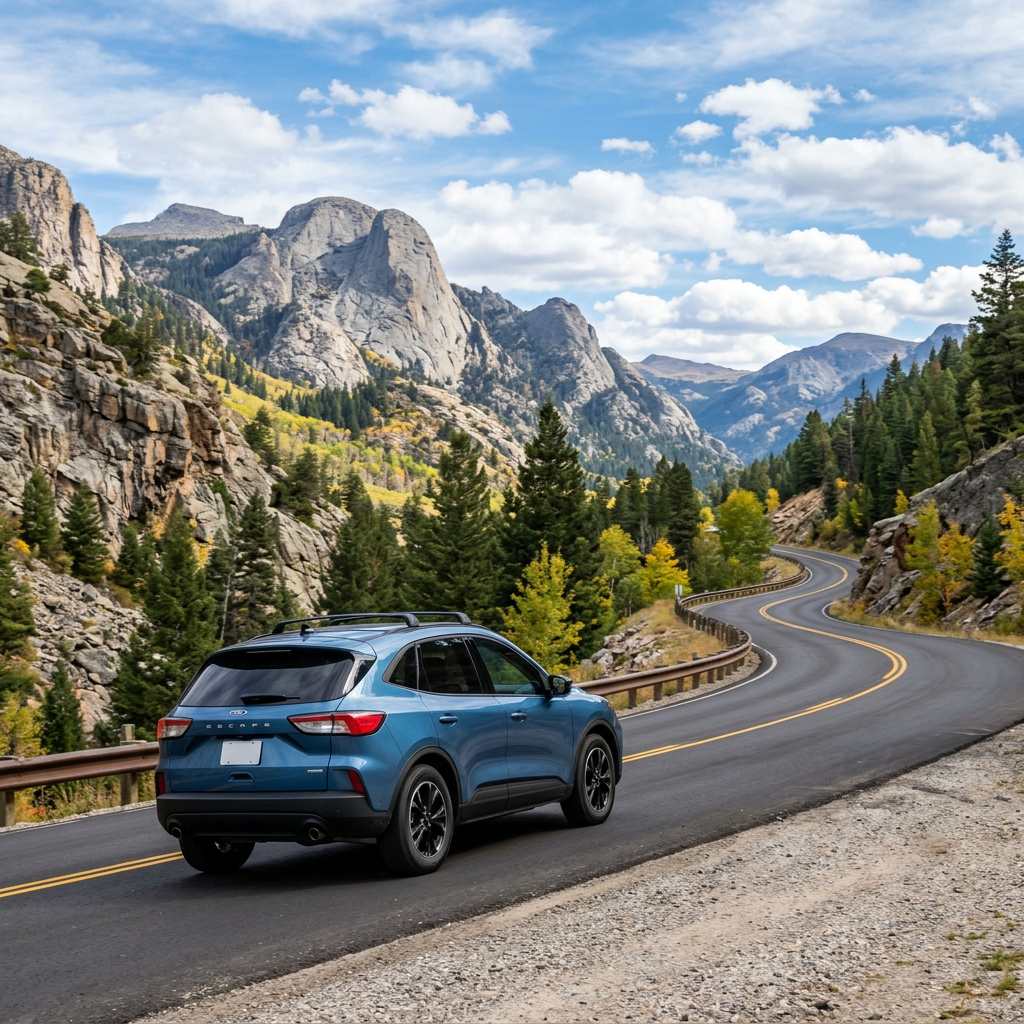
At an elevation of 5,358 feet, the atmosphere presents a unique physical challenge to internal combustion engines. The primary factor is air density. As elevation rises, atmospheric pressure decreases, meaning the air becomes thinner and contains fewer oxygen molecules per cubic foot. Every 1,000 feet of elevation reduces air density by approximately 3%. Because an engine requires a precise mixture of oxygen and fuel to create combustion, this reduction in available oxygen directly impacts how much energy your vehicle can produce.
Without a sufficient volume of oxygen, the combustion process is less energetic, resulting in a proportional loss of horsepower. For a conventional vehicle, this physical restriction means the engine must work significantly harder to perform routine tasks, such as climbing steep highway grades or maintaining highway speeds. When the engine works harder to pull in enough oxygen, it experiences increased mechanical stress, which can accelerate the wear on internal components and support systems.
Understanding these elevation dynamics is the first step in protecting your vehicle from premature wear. If you have recently moved to the area or noticed a change in how your vehicle performs during daily drives, our team at Fremont Ford Lander is here to help. You can easily find us or get directions to Fremont Ford Lander to speak with a technician in person. If you prefer to discuss your vehicle’s performance over the phone, feel free to give our service department a quick call to ask about high-altitude maintenance.
Table of Contents
- How Lander Elevation Affects Naturally Aspirated Versus Turbocharged Vehicles
- Preventing Engine Overheating and Thermal Stress on Mountain Climbs
- Monitoring Transmission Health and Fluid Temperatures on Steep Grades
- EV Battery Performance and Range Management in Cold Mountain Climates
- Optimizing Oil Change Intervals and Maintenance for High-Altitude Driving
- Frequently Asked Questions About High-Altitude Vehicle Performance
- Keep Your Vehicle Mountain-Ready with Fremont Ford Lander
How Lander Elevation Affects Naturally Aspirated Versus Turbocharged Vehicles
The mechanical design of your engine determines exactly how it responds to thin mountain air. Naturally aspirated petrol engines draw in air relying solely on atmospheric pressure. Because of this, they lose approximately 3% of their power for every 1,000 feet of elevation gain. At our local elevation of 5,358 feet, a naturally aspirated engine will experience a permanent power loss of roughly 15% to 18% compared to its performance at sea level. For example, a vehicle rated at 300 hp at sea level will effectively produce only about 250 hp when driving around town, requiring more throttle input and higher engine speeds to keep pace.
In contrast, turbocharged engines are far more resilient at high elevations. A turbocharger uses a turbine driven by exhaust gases to mechanically compress incoming air before forcing it into the combustion chamber, which largely compensates for the lower atmospheric pressure. Turbocharged systems use barometric sensors to automatically increase boost pressure in thin air, typically limiting their power loss to just 10% to 15% even at extreme mountain heights. This makes turbocharged configurations highly efficient for heavy-duty work and high-altitude driving, as they maintain their torque curves much better than their naturally aspirated counterparts.
Maintaining these complex induction systems requires specialized knowledge, especially when dealing with high-altitude calibration. Whether you are driving a turbocharged EcoBoost model or a traditional V8, keeping the air filtration and pressure sensors clean is vital for maintaining the correct air-fuel ratio. If you want to experience how different powertrains handle our local terrain, you can schedule a test drive in a certified used car or schedule a test drive in a used vehicle to compare naturally aspirated and turbocharged performance firsthand.
Preventing Engine Overheating and Thermal Stress on Mountain Climbs
Driving up steep mountain grades, such as the roads leading into Dubois, puts an immense thermal load on your vehicle’s cooling system. As your engine works harder to overcome the steep terrain and reduced oxygen levels, it generates a substantial amount of internal heat. At the same time, the thinner air at high altitudes is less efficient at carrying heat away from the radiator fins, forcing your cooling system to work much harder than it would at sea level.
Low coolant levels or degraded fluids are the leading causes of high-altitude overheating. Over time, engine coolant loses its chemical properties and its ability to transfer heat efficiently. Additionally, small leaks in hoses, water pump seals, or the radiator tank can cause a gradual loss of pressure, lowering the boiling point of the liquid and leading to rapid boil-overs under heavy loads.
To protect your engine from severe thermal damage during steep climbs, local drivers should follow these preventive maintenance steps:
- Regularly check the coolant level and inspect hoses for seeping or cracks.
- Have your radiator fins cleared of dirt, bugs, and road debris that block airflow.
- Monitor your dashboard temperature gauge closely when climbing mountain passes.
- Turn off the air conditioning and turn on the heater temporarily if you see the temperature gauge creeping upward.
- Never remove the radiator cap while the engine is hot, as the pressurized system can cause severe burns.
Monitoring Transmission Health and Fluid Temperatures on Steep Grades
Your transmission is under constant mechanical stress when navigating high-altitude mountain passes. Because the engine produces less power in thin air, the transmission must shift more frequently and remain in lower gears for extended periods to maintain momentum. This continuous shifting and high-torque load generates extreme internal friction, which rapidly raises the temperature of the transmission fluid.
When transmission fluid overheats, it begins to oxidize and lose its lubricating properties. Once the fluid degrades, it can no longer protect the internal clutches, bearings, and planetary gears from metal-on-metal wear. If you notice a slipping sensation, delayed shifts, unusual whining noises, or a sweet, burnt odor after climbing a steep grade, your transmission is likely running too hot and requires immediate attention.
Using your vehicle’s mechanical features properly can significantly reduce transmission stress. When descending steep grades, avoid riding your brakes and instead shift your vehicle into a lower gear or use manual mode to utilize engine braking. This simple driving habit reduces the load on both your brakes and your transmission, preventing thermal runaway and extending the lifespan of your drivetrain components.
EV Battery Performance and Range Management in Cold Mountain Climates
Electric vehicles (EVs) handle high altitudes exceptionally well because electric motors do not require oxygen to operate, meaning they suffer zero power loss at high elevations. However, the cold temperatures common to mountain climates present a different set of challenges for battery systems. Cold weather increases the internal resistance of the battery cells, which temporarily reduces the efficiency of the chemical reactions that store and release energy.
In freezing temperatures, an EV can experience a temporary range reduction of 20% to 40%. Approximately two-thirds of this extra energy consumption is used simply to heat the vehicle cabin and keep the battery pack within its optimal operating temperature range. This energy draw also affects the efficiency of regenerative braking systems, as a cold battery cannot accept high rates of charge as quickly as a warm one.
To maximize your EV’s driving range during cold mountain winters, consider parking in a garage to keep the initial battery temperature higher. Preheating the cabin while the vehicle is still plugged into a charger is another highly effective strategy, as it uses grid power rather than drawing directly from the battery pack once you hit the road.
Optimizing Oil Change Intervals and Maintenance for High-Altitude Driving
Operating a vehicle in high-altitude environments qualifies as “severe driving conditions” under most manufacturer maintenance schedules. The combination of steep climbs, thin air, and extreme seasonal temperature fluctuations forces engines to run hotter and under higher loads. This accelerated workload breaks down motor oil much faster than flat, sea-level commuting, making regular oil changes essential for engine longevity.
As motor oil degrades, its viscosity changes, and it loses its ability to lubricate critical moving parts, such as pistons and camshafts. This can lead to sludge buildup, increased friction, and poor heat dissipation. Using high-quality synthetic oil that meets precise manufacturer specifications is crucial, as synthetic lubricants offer superior thermal stability and flow better in cold winter temperatures.
Staying on top of your maintenance schedule is the best way to prevent costly engine repairs. Our factory-trained technicians understand the unique demands that Wyoming’s terrain puts on your vehicle. When it is time for your next oil change or a comprehensive multi-point inspection, you can easily schedule service online to keep your engine running smoothly.
Frequently Asked Questions About High-Altitude Vehicle Performance
Q: Why does my engine feel so sluggish when driving through high-altitude mountain passes?
A: Your engine feels sluggish because the air is less dense at higher elevations, meaning there is less oxygen available for combustion. A naturally aspirated engine loses about 3% of its horsepower for every 1,000 feet of climb, resulting in an approximate 15% to 18% power loss at our local elevation.
Q: Is a turbocharged engine better than a naturally aspirated engine for high-altitude driving?
A: Yes. Turbocharged engines use a compressor to force more air into the combustion chamber, which helps maintain consistent power levels even in thin air. While a naturally aspirated engine loses significant power, a turbocharger automatically compensates for the lower atmospheric pressure.
Q: How does elevation affect my vehicle’s tire pressure?
A: Tire pressure readings increase by approximately 0.1 to 0.2 psi for every 1,000 feet of elevation gain. This happens because the atmospheric pressure outside the tire decreases, allowing the air inside the tire to exert slightly higher gauge pressure.
Q: Should I use a different viscosity of engine oil for high-altitude winter driving?
A: You should always use the oil viscosity recommended in your owner’s manual. However, switching to a high-quality full synthetic oil of the recommended weight can provide better flow during cold starts and superior thermal protection during hot mountain climbs.
Q: What should I do if my temperature gauge starts rising while climbing a steep grade?
A: If your temperature gauge begins to rise, turn off your air conditioning immediately and turn on your cabin heater to help pull heat away from the engine. If the temperature continues to climb, pull over safely, let the engine idle to circulate fluids, and never open the radiator cap while the system is hot.
Keep Your Vehicle Mountain-Ready with Fremont Ford Lander
Whether you are commuting daily through Casper or hauling heavy equipment near Dubois, your vehicle’s engine and cooling systems work incredibly hard to overcome the challenges of high-altitude driving. From power loss in naturally aspirated engines to the extreme thermal stress of climbing steep mountain grades, regular maintenance is the key to ensuring your vehicle remains dependable.
At Fremont Ford Lander, our factory-trained technicians have the specialized tools, genuine OEM parts, and local expertise needed to keep your vehicle performing at its best. We can inspect your cooling system, test your battery, perform fluid flushes, and ensure your engine is fully prepared for our demanding terrain.
Do not wait for a warning light or a roadside breakdown on a mountain pass to address your vehicle’s maintenance needs. If you want to speak with our service team, you can call us directly at (307) 335-3359 to ask questions or book an appointment. When you are ready for your next service visit, stop by our dealership located at 1731 W Main St, Lander, WY 82520, or get directions to Fremont Ford Lander to let our professional team take care of your vehicle.
Connect with us


