
Blog

All SUVs Explorer Bronco Expedition Lander Ford Dealer
in Expedition

Ford Explorer vs. Expedition: Choosing the Best 3 Row Family SUV for Wyoming Roads

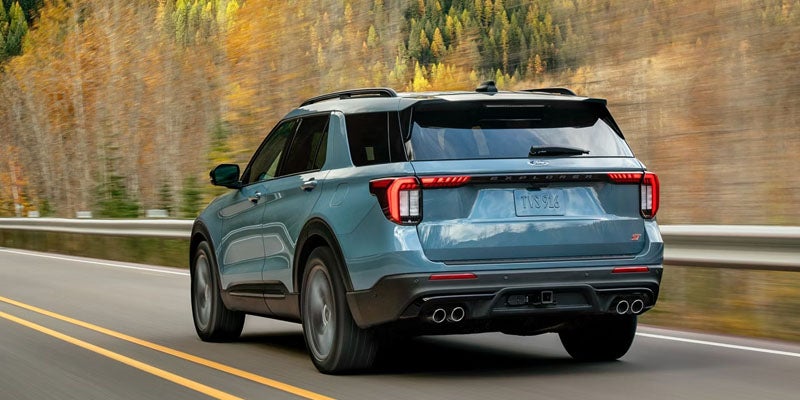
Navigating family life in Fremont County requires a vehicle that handles far more than school drop-offs and grocery runs. Between sudden Wind River winter storms, highway passes over South Pass, towing campers to Boysen Reservoir, and weekend road trips across Wyoming, your family SUV needs space, capability, and uncompromised safety. more Two of the most popular choices for local drivers are the Ford Explorer and the Ford Expedition. While both feature intelligent four-wheel-drive systems and advanced safety technology, they serve different family sizes and lifestyle needs. Here is a detailed comparison from the team at Fremont Ford Lander to help you decide which SUV belongs in your driveway. 1. Space & Seating: Daily Commutes vs. Full Family Hauling Ford Explorer: Agility Meets Three-Row Flexibility Seating Capacity: 6 to 7 passengers Best For: Growing families, daily commuting around Lander, and easy maneuvering in tight spaces. Cargo Space: 18.2 cubic feet behind the 3rd row; up to 87.8 cubic feet with rear seats folded flat. The Ford Explorer offers three rows of seating in a midsize package that is nimble and easy to park. It's an ideal daily driver for navigating Main Street or commuting to Riverton, offering comfortable second-row captain's chairs or a bench seat. Ford Expedition: Maximum Passenger Comfort & Cargo Seating Capacity: 7 to 8 passengers Best For: Large families, older kids/teens, long road trips, and maximum cargo capacity. Cargo Space: 20.9 cubic feet behind the 3rd row (36.0 cu. ft. in Expedition MAX); up to 104.6 cubic feet (121.5 cu. ft. in MAX) with seats folded. If adult-sized legroom in the third row is a top priority, the full-size Expedition shines. The available Expedition MAX adds nearly a foot in overall length, ensuring you never have to choose between full passenger seating and hauling luggage, sports gear, or camping equipment. 2026 Ford Explorer Interior 2. Power, Towing, and Capability for Wyoming Terrain Wyoming drivers demand serious power—whether merging onto US-287 or hauling a travel trailer up mountain grades. Feature Ford Explorer Ford Expedition Engine Options 2.3L EcoBoost® I-4 (300 hp) / 3.0L EcoBoost® V6 (400 hp) 3.5L EcoBoost® V6 (Up to 440 hp / 510 lb-ft torque) Drivetrain Intelligent 4WD with Terrain Management System™ Control Trac® 4WD with Electronic Limited-Slip Differential Max Towing Up to 5,000 lbs. Up to 9,300 lbs. (with Heavy-Duty Trailer Tow Pkg) Ground Clearance Up to 8.6 inches (Explorer Timberline / Tremor) Up to 10.6 inches (Expedition Timberline) Choose the Explorer if: You want standard 300 horsepower with excellent fuel efficiency, sufficient towing for light boats, utility trailers, or small camper pop-ups, and nimble handling through mountain twists. Choose the Expedition if: You tow heavy travel trailers, horse trailers, or boats over mountain passes. With up to 9,300 lbs. of towing capacity and available Pro Trailer Backup Assist™, the Expedition handles heavy loads with ease. 2026 Ford Expedition Interior. Photo: Ford. 3. Winter Driving & Off-Road Preparedness Wyoming winters don't mess around, and road conditions in Lander can change rapidly. Both vehicles come equipped with Ford’s Intelligent 4WD System featuring selectable drive modes tailored for deep snow, ice, mud, and rutted roads. Explorer Timberline / Active Trim Options: Feature underbody skid plates, elevated ground clearance, and all-terrain tires that handle dirt roads and unplowed streets with confidence. Expedition Control Trac® 4WD: Offers a 2-speed transfer case with 4WD Auto mode, allowing you to set it and forget it when highway conditions alternate between dry asphalt and black ice. 4. Fuel Efficiency & Highway Cruising When covering long distances across Wyoming, fuel economy matters: Ford Explorer: Delivers up to an EPA-estimated 20 MPG city / 27 MPG highway, making it significantly more economical for weekly driving and long-distance commuting. Ford Expedition: Returns an EPA-estimated 16 MPG city / 22 MPG highway, balanced by a larger fuel tank for extended driving range between fill-ups. Which One Should You Choose? Buy the Ford Explorer if: You have 1 to 3 kids and need occasional third-row seating. You prefer a vehicle that is easy to park and offers better fuel economy. Your towing needs are under 5,000 lbs. Buy the Ford Expedition if: You regularly transport 5 or more passengers or tall teenagers. You frequently tow heavy trailers or carry extensive gear over long distances. You want maximum interior room and road presence on Wyoming highways. Test Drive Both at Fremont Ford Lander The best way to decide between the Ford Explorer vs. Expedition is to bring the family down for a hands-on test drive. Compare third-row legroom, test out the cargo configurations, and feel the EcoBoost power for yourself. 📍 Fremont Ford Lander 1731 W Main St, Lander, WY 82520 📞 Call or visit us today to explore our full inventory of new and certified pre-owned Ford SUVs!
Read More

High-Altitude Driving: How Lander’s Elevation Affects Your Engine

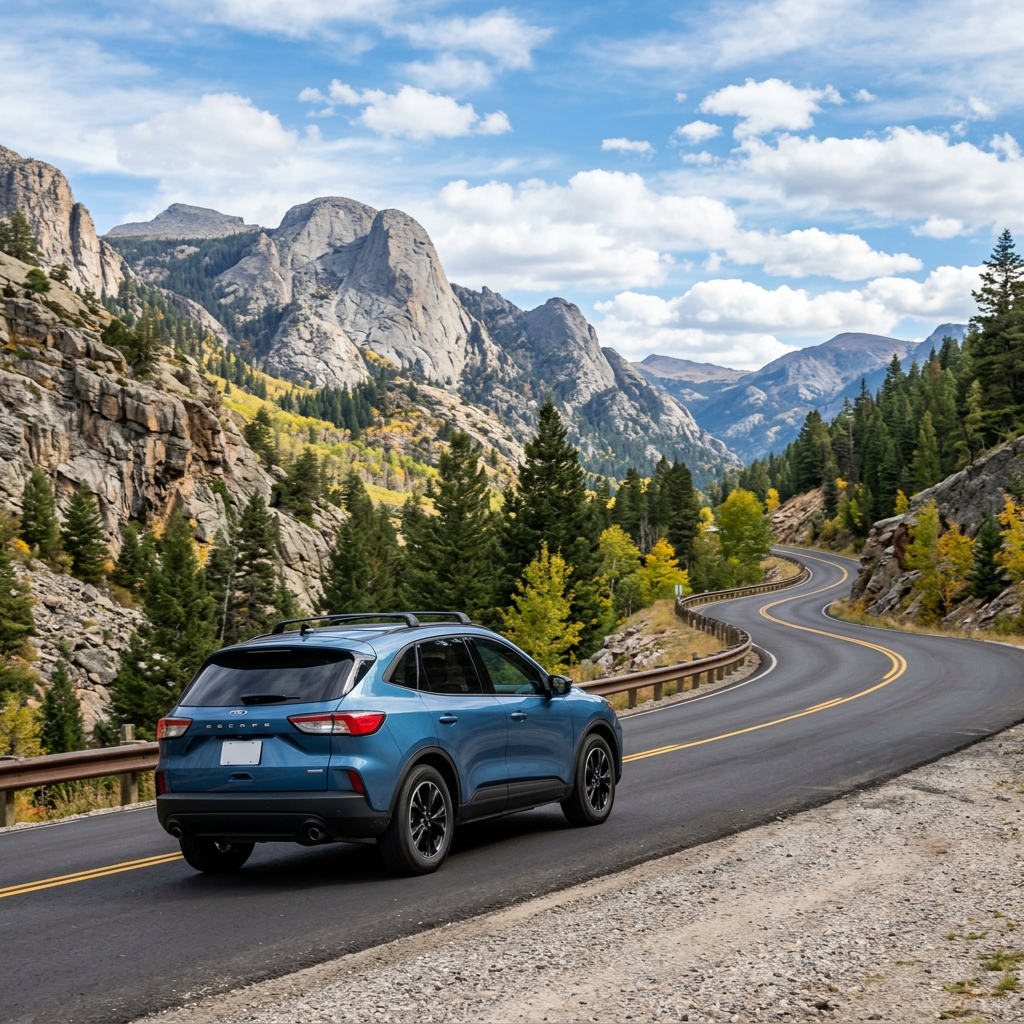
Turbocharged Ford Escape. At an elevation of 5,358 feet, the atmosphere presents a unique physical challenge to internal combustion engines. The primary factor is air density. As elevation rises, atmospheric pressure decreases, meaning the air becomes thinner and contains fewer oxygen molecules per cubic foot. Every 1,000 feet of elevation reduces air density by approximately 3%. Because an engine requires a precise mixture of oxygen and fuel to create combustion, this reduction in available oxygen directly impacts how much energy your vehicle can produce. more Without a sufficient volume of oxygen, the combustion process is less energetic, resulting in a proportional loss of horsepower. For a conventional vehicle, this physical restriction means the engine must work significantly harder to perform routine tasks, such as climbing steep highway grades or maintaining highway speeds. When the engine works harder to pull in enough oxygen, it experiences increased mechanical stress, which can accelerate the wear on internal components and support systems. Understanding these elevation dynamics is the first step in protecting your vehicle from premature wear. If you have recently moved to the area or noticed a change in how your vehicle performs during daily drives, our team at Fremont Ford Lander is here to help. You can easily find us or get directions to Fremont Ford Lander to speak with a technician in person. If you prefer to discuss your vehicle's performance over the phone, feel free to give our service department a quick call to ask about high-altitude maintenance. Table of Contents How Lander Elevation Affects Naturally Aspirated Versus Turbocharged Vehicles Preventing Engine Overheating and Thermal Stress on Mountain Climbs Monitoring Transmission Health and Fluid Temperatures on Steep Grades EV Battery Performance and Range Management in Cold Mountain Climates Optimizing Oil Change Intervals and Maintenance for High-Altitude Driving Frequently Asked Questions About High-Altitude Vehicle Performance Keep Your Vehicle Mountain-Ready with Fremont Ford Lander How Lander Elevation Affects Naturally Aspirated Versus Turbocharged Vehicles The mechanical design of your engine determines exactly how it responds to thin mountain air. Naturally aspirated petrol engines draw in air relying solely on atmospheric pressure. Because of this, they lose approximately 3% of their power for every 1,000 feet of elevation gain. At our local elevation of 5,358 feet, a naturally aspirated engine will experience a permanent power loss of roughly 15% to 18% compared to its performance at sea level. For example, a vehicle rated at 300 hp at sea level will effectively produce only about 250 hp when driving around town, requiring more throttle input and higher engine speeds to keep pace. In contrast, turbocharged engines are far more resilient at high elevations. A turbocharger uses a turbine driven by exhaust gases to mechanically compress incoming air before forcing it into the combustion chamber, which largely compensates for the lower atmospheric pressure. Turbocharged systems use barometric sensors to automatically increase boost pressure in thin air, typically limiting their power loss to just 10% to 15% even at extreme mountain heights. This makes turbocharged configurations highly efficient for heavy-duty work and high-altitude driving, as they maintain their torque curves much better than their naturally aspirated counterparts. Maintaining these complex induction systems requires specialized knowledge, especially when dealing with high-altitude calibration. Whether you are driving a turbocharged EcoBoost model or a traditional V8, keeping the air filtration and pressure sensors clean is vital for maintaining the correct air-fuel ratio. If you want to experience how different powertrains handle our local terrain, you can schedule a test drive in a certified used car or schedule a test drive in a used vehicle to compare naturally aspirated and turbocharged performance firsthand. Preventing Engine Overheating and Thermal Stress on Mountain Climbs Driving up steep mountain grades, such as the roads leading into Dubois, puts an immense thermal load on your vehicle's cooling system. As your engine works harder to overcome the steep terrain and reduced oxygen levels, it generates a substantial amount of internal heat. At the same time, the thinner air at high altitudes is less efficient at carrying heat away from the radiator fins, forcing your cooling system to work much harder than it would at sea level. Low coolant levels or degraded fluids are the leading causes of high-altitude overheating. Over time, engine coolant loses its chemical properties and its ability to transfer heat efficiently. Additionally, small leaks in hoses, water pump seals, or the radiator tank can cause a gradual loss of pressure, lowering the boiling point of the liquid and leading to rapid boil-overs under heavy loads. To protect your engine from severe thermal damage during steep climbs, local drivers should follow these preventive maintenance steps: Regularly check the coolant level and inspect hoses for seeping or cracks. Have your radiator fins cleared of dirt, bugs, and road debris that block airflow. Monitor your dashboard temperature gauge closely when climbing mountain passes. Turn off the air conditioning and turn on the heater temporarily if you see the temperature gauge creeping upward. Never remove the radiator cap while the engine is hot, as the pressurized system can cause severe burns. Monitoring Transmission Health and Fluid Temperatures on Steep Grades Your transmission is under constant mechanical stress when navigating high-altitude mountain passes. Because the engine produces less power in thin air, the transmission must shift more frequently and remain in lower gears for extended periods to maintain momentum. This continuous shifting and high-torque load generates extreme internal friction, which rapidly raises the temperature of the transmission fluid. When transmission fluid overheats, it begins to oxidize and lose its lubricating properties. Once the fluid degrades, it can no longer protect the internal clutches, bearings, and planetary gears from metal-on-metal wear. If you notice a slipping sensation, delayed shifts, unusual whining noises, or a sweet, burnt odor after climbing a steep grade, your transmission is likely running too hot and requires immediate attention. Using your vehicle's mechanical features properly can significantly reduce transmission stress. When descending steep grades, avoid riding your brakes and instead shift your vehicle into a lower gear or use manual mode to utilize engine braking. This simple driving habit reduces the load on both your brakes and your transmission, preventing thermal runaway and extending the lifespan of your drivetrain components. EV Battery Performance and Range Management in Cold Mountain Climates Electric vehicles (EVs) handle high altitudes exceptionally well because electric motors do not require oxygen to operate, meaning they suffer zero power loss at high elevations. However, the cold temperatures common to mountain climates present a different set of challenges for battery systems. Cold weather increases the internal resistance of the battery cells, which temporarily reduces the efficiency of the chemical reactions that store and release energy. In freezing temperatures, an EV can experience a temporary range reduction of 20% to 40%. Approximately two-thirds of this extra energy consumption is used simply to heat the vehicle cabin and keep the battery pack within its optimal operating temperature range. This energy draw also affects the efficiency of regenerative braking systems, as a cold battery cannot accept high rates of charge as quickly as a warm one. To maximize your EV's driving range during cold mountain winters, consider parking in a garage to keep the initial battery temperature higher. Preheating the cabin while the vehicle is still plugged into a charger is another highly effective strategy, as it uses grid power rather than drawing directly from the battery pack once you hit the road. Optimizing Oil Change Intervals and Maintenance for High-Altitude Driving Operating a vehicle in high-altitude environments qualifies as "severe driving conditions" under most manufacturer maintenance schedules. The combination of steep climbs, thin air, and extreme seasonal temperature fluctuations forces engines to run hotter and under higher loads. This accelerated workload breaks down motor oil much faster than flat, sea-level commuting, making regular oil changes essential for engine longevity. As motor oil degrades, its viscosity changes, and it loses its ability to lubricate critical moving parts, such as pistons and camshafts. This can lead to sludge buildup, increased friction, and poor heat dissipation. Using high-quality synthetic oil that meets precise manufacturer specifications is crucial, as synthetic lubricants offer superior thermal stability and flow better in cold winter temperatures. Staying on top of your maintenance schedule is the best way to prevent costly engine repairs. Our factory-trained technicians understand the unique demands that Wyoming's terrain puts on your vehicle. When it is time for your next oil change or a comprehensive multi-point inspection, you can easily schedule service online to keep your engine running smoothly. Frequently Asked Questions About High-Altitude Vehicle Performance Q: Why does my engine feel so sluggish when driving through high-altitude mountain passes? A: Your engine feels sluggish because the air is less dense at higher elevations, meaning there is less oxygen available for combustion. A naturally aspirated engine loses about 3% of its horsepower for every 1,000 feet of climb, resulting in an approximate 15% to 18% power loss at our local elevation. Q: Is a turbocharged engine better than a naturally aspirated engine for high-altitude driving? A: Yes. Turbocharged engines use a compressor to force more air into the combustion chamber, which helps maintain consistent power levels even in thin air. While a naturally aspirated engine loses significant power, a turbocharger automatically compensates for the lower atmospheric pressure. Q: How does elevation affect my vehicle's tire pressure? A: Tire pressure readings increase by approximately 0.1 to 0.2 psi for every 1,000 feet of elevation gain. This happens because the atmospheric pressure outside the tire decreases, allowing the air inside the tire to exert slightly higher gauge pressure. Q: Should I use a different viscosity of engine oil for high-altitude winter driving? A: You should always use the oil viscosity recommended in your owner's manual. However, switching to a high-quality full synthetic oil of the recommended weight can provide better flow during cold starts and superior thermal protection during hot mountain climbs. Q: What should I do if my temperature gauge starts rising while climbing a steep grade? A: If your temperature gauge begins to rise, turn off your air conditioning immediately and turn on your cabin heater to help pull heat away from the engine. If the temperature continues to climb, pull over safely, let the engine idle to circulate fluids, and never open the radiator cap while the system is hot. Keep Your Vehicle Mountain-Ready with Fremont Ford Lander Whether you are commuting daily through Casper or hauling heavy equipment near Dubois, your vehicle's engine and cooling systems work incredibly hard to overcome the challenges of high-altitude driving. From power loss in naturally aspirated engines to the extreme thermal stress of climbing steep mountain grades, regular maintenance is the key to ensuring your vehicle remains dependable. At Fremont Ford Lander, our factory-trained technicians have the specialized tools, genuine OEM parts, and local expertise needed to keep your vehicle performing at its best. We can inspect your cooling system, test your battery, perform fluid flushes, and ensure your engine is fully prepared for our demanding terrain. Do not wait for a warning light or a roadside breakdown on a mountain pass to address your vehicle's maintenance needs. If you want to speak with our service team, you can call us directly at (307) 335-3359 to ask questions or book an appointment. When you are ready for your next service visit, stop by our dealership located at 1731 W Main St, Lander, WY 82520, or get directions to Fremont Ford Lander to let our professional team take care of your vehicle. © 2026 Fremont Ford Lander. All rights reserved.

Navigating the Wind River Range with Bronco and onX Offroad

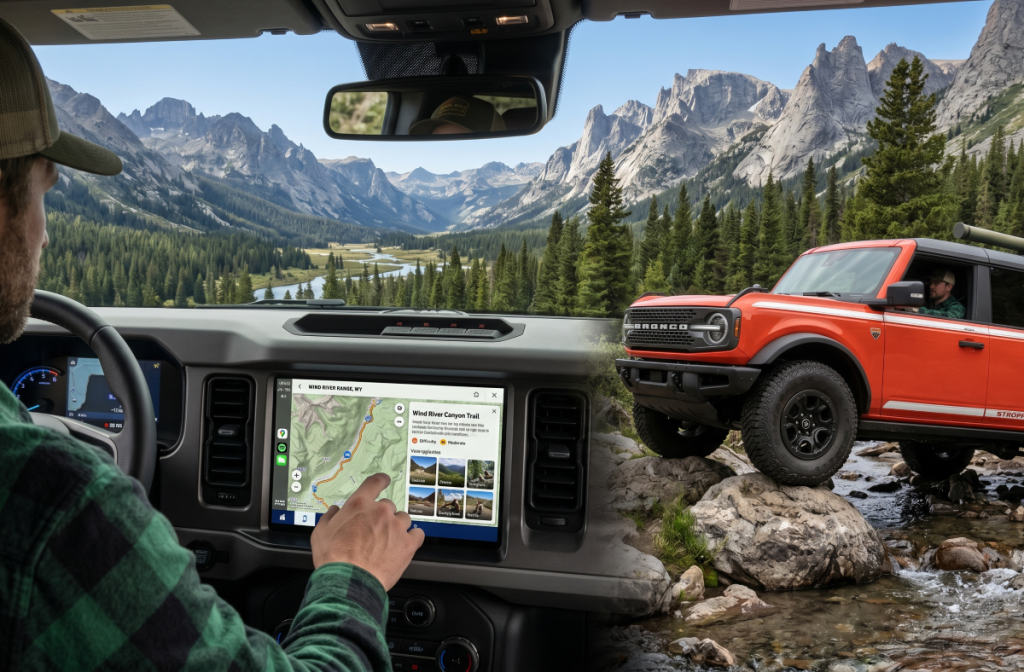
The transition from the paved streets of Wyoming towns to the rugged trails of the Wind River Range requires more than just a capable vehicle; it demands precise navigation that works where cell towers do not reach. Ford and onX recently announced that owners of 2017 and newer Ford vehicles are eligible for a complimentary one-year onX Offroad Elite membership. This partnership brings over 650,000 miles of mapped off-highway vehicle trails directly to the driver, including detailed trail descriptions, difficulty ratings, and user-uploaded photos that help you decide if a route matches your experience level. more Exploring the backcountry around Wyoming Mountain Ranges often involves moving through river valleys and expansive forests where traditional GPS apps fail. The onX Offroad Elite integration allows you to download high-resolution maps for offline use, ensuring that your topographic lines and trail markers remain visible even in the most remote canyons. This system is designed to complement the inherent ruggedness of the Bronco, providing a digital safety net for those who work in agriculture or spend their weekends hunting and fishing in the Wyoming wilderness. For those ready to equip themselves for the next season, our team is located at 1731 W Main St, Lander, WY 82520, where we can demonstrate how these mapping tools function in real-world scenarios. If you have questions about which models currently support this integration, feel free to give our staff a quick call to discuss the technology available in our current lineup. Table of Contents Accessing onX Offroad on the Sync 4 Infotainment Display Dominating Rocky Trails with the Sasquatch Package Ground Clearance Comparing Ford's Native onX Integration to Jeep's Adventure Guides Off-Road Maintenance and Keeping Your Bronco Trail-Ready Find Your Adventure-Ready Bronco at Fremont Ford Lander Common Questions About Bronco and onX Offroad Accessing onX Offroad on the Sync 4 Infotainment Display The 12.0" infotainment display in the 2026 Ford Bronco serves as the primary interface for the onX Offroad Elite system, providing a high-definition view of the surrounding terrain. Accessing the software is straightforward: once the membership is activated via the FordPass app, the maps can be mirrored on the vehicle’s screen through Apple CarPlay or Android Auto. This allows you to keep your smartphone tucked away while using the large, factory-installed touchscreen to navigate complex trail intersections or monitor your progress along a pre-planned route. When I walk families through the Sync 4 system, they usually ask if they can download maps for the Wind River Range before they even look at the radio presets. The integration is built to be practical and jargon-light, respecting the fact that most drivers want tools that work without a steep learning curve. To activate the service, you simply sign in with your Ford credentials in the onX app, which then permits the sharing of select vehicle and account information to enable the connected navigation services. Whether you are browsing our new Ford inventory or looking for a dependable option among our certified used cars, our team can help you verify that the Sync 4 hardware is ready for your next trip. Having a dedicated off-road mapping tool integrated into the dashboard reduces the need for external tablets or handheld GPS units, keeping the cabin organized for family trips or work commutes through the rugged landscapes near Dubois. Dominating Rocky Trails with the Sasquatch Package Ground Clearance Navigating the rocky paths and uneven terrain of the Wyoming backcountry often comes down to the physical dimensions of the vehicle. The 2026 Ford Bronco Stroppe trim, which starts at $72,450, comes equipped with a 2.7L V6 engine and a 10-speed Automatic transmission. When outfitted with the Sasquatch Package, the Bronco offers 11.5 inches of ground clearance, a critical spec for clearing obstacles that would stop a standard SUV. This package also includes high-clearance fender flares and a position-sensitive suspension system designed to handle the variable conditions found in the Absaroka Mountains. Pricing Feature Available Starting MSRP $72,450 Engine & Performance Feature Standard across all trims Engine 2.7L V6 Transmission Automatic Drivetrain 4WD The 4WD system works in tandem with selectable G.O.A.T. Modes (Goes Over Any Type of Terrain), allowing the driver to calibrate the throttle response and traction control for mud, sand, or rock crawling. For those who prioritize durability, the Bronco features a heavy-duty modular front bumper that is upfit-friendly, supporting additions like winches or brush guards. Inside, you will find about 38 cubic feet of cargo space behind the second row, providing enough room for camping gear, tools, or ranching supplies. If you are currently researching your options, you can explore our selection of used cars to find models already equipped with off-road hardware. We also encourage you to schedule a test drive in a new vehicle to feel how the high-clearance suspension handles both the highway and the gravel. The combination of the 2.7L V6 power and the specialized chassis makes the Bronco a reliable partner for those who balance a demanding workday with an active outdoor lifestyle. Comparing Ford's Native onX Integration to Jeep's Adventure Guides While many off-road vehicles offer mapping tools, the native onX Offroad Elite integration in the Bronco provides a specific advantage over competitors like the Jeep Wrangler. Jeep utilizes the Uconnect 5 system, which features Adventure Guides powered by Trails Offroad. While both systems provide trail data, the Ford partnership with onX gives owners access to an Elite membership that includes not just off-road trails, but also onX Hunt and onX Backcountry. This broader suite of tools is particularly useful for Wyoming residents who may need specialized maps for hunting season or winter trekking. The storage of offline maps is another area where the Bronco’s system excels. A high-resolution map region covering a significant portion of the Wind River Range can occupy several hundred megabytes of storage. Because the Bronco’s Sync 4 system is designed to handle these large data sets through mirrored smartphone integration, drivers can store multiple regions without worrying about internal system lag. This ensures that even when you are miles away from the nearest paved road in Dubois, your navigation remains fluid and responsive. For those who are cross-shopping these brands, it is helpful to see the technology in action. You can test drive a used vehicle at our dealership to compare how different infotainment systems handle local coordinates and trail data. Our team is here to provide straightforward comparisons so you can choose the navigation and capability package that best fits your professional and recreational needs. Off-Road Maintenance and Keeping Your Bronco Trail-Ready Frequent use of a vehicle in remote Wyoming areas requires a proactive approach to maintenance to ensure long-term reliability. While the onX Offroad Elite app helps you find your way, the mechanical health of your Bronco is what gets you home. We recommend regular inspections of the underbody, steering components, and suspension, especially after navigating the silt and rocks of the backcountry. The 2026 Bronco is backed by a 3 yr./ 36,000 mi. basic warranty and a 5 yr./ 60,000 mi. drivetrain warranty, providing peace of mind for those who put their trucks to work. If you find yourself in an unexpected situation, Ford provides a 5 yr./ 60,000 mi. roadside assistance program. This manufacturer-backed service ensures you have access to brand-specific expertise and genuine parts if a breakdown occurs. You can reach Ford Roadside Assistance: 800-241-3673 for support, which is a significant benefit of Ford ownership compared to third-party services. Keeping your vehicle in top shape is essential for safety, and our certified technicians are trained to handle the unique wear and tear that comes with Wyoming driving conditions. When it is time for your next check-up, you can easily schedule service through our website to keep your Bronco ready for the season. If you are considering upgrading to a newer model with the latest Sync 4 features, we can also help you value your trade-in. Maintaining a consistent service history not only protects your vehicle's durability but also supports its resale value when you are ready for your next adventure. Find Your Adventure-Ready Bronco at Fremont Ford Lander Selecting a vehicle with the right technology and hardware is the first step toward exploring the Wyoming backcountry with confidence. At Fremont Ford Lander, we focus on providing practical, dependable vehicles that meet the high standards of our local community. Whether you need the extreme capability of the Stroppe trim or the balanced features of the Outer Banks, we can help you navigate the options, including the Ford Connectivity Package and various roof configurations. Our dealership is committed to a straightforward and transparent buying process. We invite you to visit us at 1731 W Main St, Lander, WY 82520 to see our current inventory in person. If you prefer to start the process from home, you can give us a quick call to check availability or ask about specific features like the onX Offroad Elite integration. We also offer flexible financing options designed to fit the budgets of working professionals and families alike. You can take the first step today by completing our online finance application to see what options are available to you. Our team is here to ensure that your next vehicle is not just a purchase, but a reliable partner for your work and your lifestyle in the heart of Wyoming. Common Questions About Bronco and onX Offroad Q: How much storage space do offline onX maps for the Wind River Range usually require? Storage requirements depend on the size of the area and the level of detail selected, but a high-resolution region covering a large part of the Wind River Range typically occupies several hundred megabytes. It is best to download these maps over a Wi-Fi connection before heading into areas without cellular service to ensure they are fully saved to your device. Q: Do you need a separate onX Offroad subscription to use the Bronco’s integrated trail maps? Owners of 2017 and newer Ford vehicles are currently eligible for a complimentary one-year onX Offroad Elite membership. After this initial trial period ends, a paid subscription is required to continue accessing premium features, such as offline map saving and the full library of 650,000 miles of trails. Q: Can the onX Offroad app be used on the Bronco's screen while driving? Yes, the app is designed to be mirrored onto the 12.0" infotainment display via Apple CarPlay or Android Auto. This allows you to view topographic maps and trail markers on a large, easy-to-read screen while maintaining focus on the path ahead, rather than looking down at a handheld phone. Q: Does the 2026 Bronco require specific hardware for the onX integration to work? The integration relies on the Sync 4 or Sync 4A infotainment system and a compatible smartphone. As long as your Bronco is equipped with these systems and you have the FordPass app installed on your phone, you can activate and use the mapping services on your vehicle's touchscreen. Q: What should I do if I lose my map connection in a remote area? By downloading your maps for offline use before you leave, the onX Offroad Elite system will continue to show your position and trail data using your vehicle's GPS, even without a cell signal. If you encounter mechanical issues while off-road, remember that your vehicle includes roadside assistance coverage that can be reached at 800-241-3673. © 2026 Fremont Ford Lander. All rights reserved.

2026 Ford Explorer

Exploring What's New on the 2026 Ford Explorer: Innovations and Upgrades

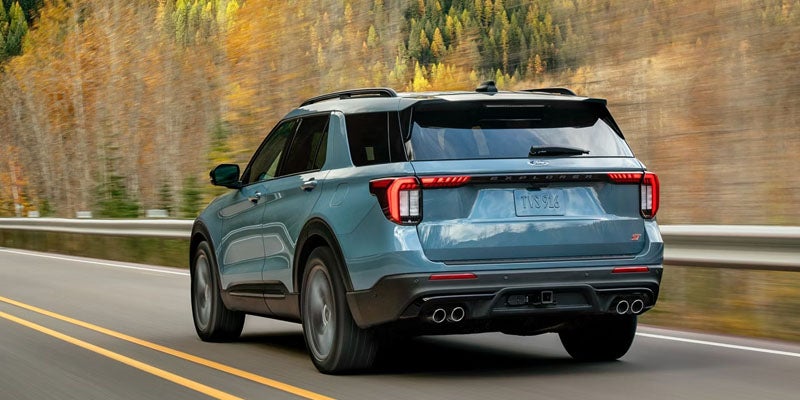
The 2026 Ford Explorer builds on its legacy as a reliable, rugged, and family-friendly SUV with thoughtful enhancements that balance everyday practicality with a touch of modern technology. For drivers in Lander, Riverton, and Casper, this model year introduces a new off-road-focused Tremor trim that boosts the Explorer’s capability and versatility. Designed to handle Wyoming’s rugged terrain and variable weather, the Tremor features a lifted suspension, a limited-slip rear differential, and all-terrain tires mounted on distinctive 18-inch wheels. These upgrades provide added ground clearance and traction, making it a dependable choice for those who need a vehicle ready for both work and weekend adventures in places like Sinks Canyon or the Wind River Mountains. more Beyond the Tremor, the rest of the Explorer lineup remains largely unchanged from the 2025 refresh, which brought subtle but meaningful improvements to the exterior design and interior comfort. The cabin benefits from upgraded soft-touch materials on the dashboard and doors, combined with new color schemes that enhance the overall ambiance. These refinements create a more welcoming environment for families and professionals alike, whether you’re navigating the streets of Lander or heading out on a weekend hike near Dubois. Technological enhancements remain a cornerstone of the 2026 Explorer experience, with a standard 13.2-inch touchscreen that integrates the Ford Digital Experience software. Through this system, drivers can easily access Google and Amazon apps, as well as Apple CarPlay and Android Auto, all designed to simplify connectivity while reducing distractions. The Explorer also offers multiple USB ports, including options for passengers in the third row, ensuring everyone stays charged and connected on longer drives. One notable change for the 2026 model is the removal of the wireless smartphone charging pad, a decision that may influence drivers who prioritize seamless in-cabin charging. However, the vehicle still offers plenty of charging options and connectivity features to keep devices powered throughout the day. For Wyoming drivers balancing rugged work demands with family commitments, the 2026 Ford Explorer’s blend of durability, comfort, and updated technology makes it a well-rounded choice. If you’re interested in experiencing these innovations firsthand, you can schedule test drive in a new vehicle at Fremont Motor Lander. For those considering upgrading, find out your current vehicle’s value with our convenient trade tool, and explore the latest selection of new Ford's ready for Wyoming roads. Whether you’re tackling the rugged back roads near Riverton or making school runs in Casper, the 2026 Explorer delivers a dependable, family-oriented SUV experience with just the right touch of innovation and ruggedness. For directions or more information, contact Fremont Motor Lander for personalized assistance. Comparing the 2026 Ford Explorer to the 2025 Model: Key Differences and Enhancements The 2026 Ford Explorer carries over much of what made the 2025 model a strong contender in the mid-size SUV market, but it introduces a notable addition that appeals to those seeking enhanced off-road capability. The biggest change for 2026 is the introduction of the Tremor trim, designed specifically for rugged terrain and outdoor enthusiasts. This trim features a lifted suspension, a limited-slip rear differential, all-terrain tires, and distinct 18-inch wheels, distinguishing it from the standard Explorer lineup. Other aspects of the 2026 model remain largely unchanged from 2025. Last year’s mid-cycle refresh brought subtle exterior styling updates alongside interior improvements, including upgraded materials and a more intuitive tech suite. These enhancements continue into the 2026 model, providing a modern and comfortable cabin for drivers and passengers alike. However, the wireless smartphone charging pad available in prior model years has been removed for 2026. From a practicality standpoint, the Explorer maintains its versatile seating configurations and cargo capacity, which are competitive but not class-leading. For those considering the 2026 Explorer but open to alternatives, lightly used 2023 or 2025 models might offer similar features at a better value. Drivers in places like Jackson, WY, and Lander will appreciate the new Tremor trim’s off-road readiness, while those in Riverton might focus more on the Explorer’s everyday comfort and tech features. If you’re interested in exploring pre-owned options, our selection of used cars offers reliable choices with excellent value. Under the Hood: Engine Options and Performance Specs of the 2026 Ford Explorer The 2026 Ford Explorer offers a versatile lineup of powertrains tailored to meet the demands of drivers in Wyoming’s diverse conditions, from city streets in Casper to rugged trails near Dubois. At the base level, the Active, ST-Line, and Platinum trims feature a turbocharged 2.3-liter four-cylinder engine producing 300 horsepower and 310 lb-ft of torque. This engine balances power with efficiency, delivering confident acceleration and a smooth driving experience suitable for daily commutes and family outings. For those seeking more robust performance, the Explorer ST and an optional upgrade on the Platinum come equipped with a twin-turbocharged 3.0-liter V-6 engine. This powerhouse generates an impressive 400 horsepower and 415 lb-ft of torque, paired with a refined 10-speed automatic transmission. The added muscle gives the Explorer ST brisk acceleration, reaching 60 mph in just over 5 seconds, making it a compelling option for those who value both speed and capability. Both powertrains are available with rear-wheel drive as standard, while all-wheel drive is offered as an option to enhance traction on Wyoming’s variable road conditions. The Explorer's towing capacity remains a strong 5,000 pounds across the lineup, supported by a Class III towing package that includes a hitch and trailer sway control—ideal for hauling boats or trailers to Jackson or Riverton recreational areas. Real-world fuel economy reflects thoughtful engineering: the four-cylinder delivers up to 29 mpg on highways, while the twin-turbo V-6 achieves around 25 mpg, striking a practical balance between power and efficiency. This makes the Explorer a reliable companion for longer drives across Wyoming’s vast landscape. Drivers interested in experiencing the powerful yet smooth performance of the 2026 Ford Explorer can schedule a test drive in a used vehicle at Fremont Motor Lander to find the best match for their lifestyle. Off-Road Capability and Ground Clearance: The Explorer Tremor Package Advantage The 2026 Ford Explorer Tremor elevates off-road performance with a significant ground clearance boost, making it well-suited for rugged Wyoming terrain. Compared to standard Explorer models, the Tremor rides on a lifted suspension that increases ground clearance by approximately 1.5 inches, offering better approach, departure, and breakover angles. This enhancement helps drivers confidently navigate uneven trails and rocky paths typical around Dubois and Riverton. Beyond clearance, the Tremor features a limited-slip rear differential and all-terrain tires mounted on unique 18-inch wheels, providing improved traction and stability on loose or slippery surfaces. The upgraded suspension maintains on-road comfort while handling off-road challenges, making it a versatile choice for drivers balancing daily commuting with outdoor adventures. For those seeking dependable off-road readiness combined with the Explorer’s spaciousness and tech, the Tremor package delivers a rugged edge without sacrificing everyday usability. Interior Space and Practicality: Third-Row Comfort and Cargo Capacity Explained The 2026 Ford Explorer offers a thoughtfully designed interior that balances passenger comfort with practical cargo solutions. While the first two rows provide ample space and supportive seating, the third row is better suited for children or shorter trips due to its lower seat height and limited legroom. This design choice helps maximize overall interior volume and keeps the cabin feeling open in front. Access to the third row is made easier by a power-folding second-row seat, which simplifies entry and exit. With all seats in use, the Explorer offers enough cargo room for everyday essentials like groceries or school gear — approximately four carry-on suitcases fit behind the third row. Folding the rear seats down opens up a generous cargo area capable of handling larger loads, making it a practical choice for families balancing work and outdoor activities in places like Casper or Dubois. This setup aligns with the needs of Wyoming drivers who require reliable space without compromising comfort or utility. The Explorer’s interior remains focused on function, delivering straightforward solutions for busy households. Trusted Maintenance and Financing Options at Fremont Motor Lander for Your 2026 Explorer Owning a 2026 Ford Explorer means counting on a vehicle built for Wyoming’s rugged roads and family demands. At Fremont Motor Lander, we back that trust with comprehensive maintenance services tailored specifically for your Explorer’s needs. Our certified technicians understand the durable engineering behind Ford vehicles and use genuine parts to ensure your SUV stays in peak condition. Whether you're commuting in Riverton or heading out for weekend adventures near Lander, regular upkeep is crucial to keep your Explorer running smoothly. You can easily schedule service online for oil changes, brake inspections, tire rotations, or any repairs with transparent pricing and dependable care. On the financing side, Fremont Motor Lander offers personalized support to help you secure the best plan for your budget and lifestyle. Our finance experts guide you through every step, simplifying the process so you can focus on enjoying your new Explorer. To get started, you can fill out a finance application anytime. We also encourage customers to find out their current vehicle’s trade-in value through our convenient online tool to maximize their buying power. Visit us or get directions to Fremont Motor Lander. For any questions, feel free to call us at (307) 335-3359.

Contact Us

Fill out this form below and we'll contact you shortly
*Required Fields